.avif)

Why Does Skin Start to Lose Its Firmness, and What Can You Actually Do About It?
Updated August 2026
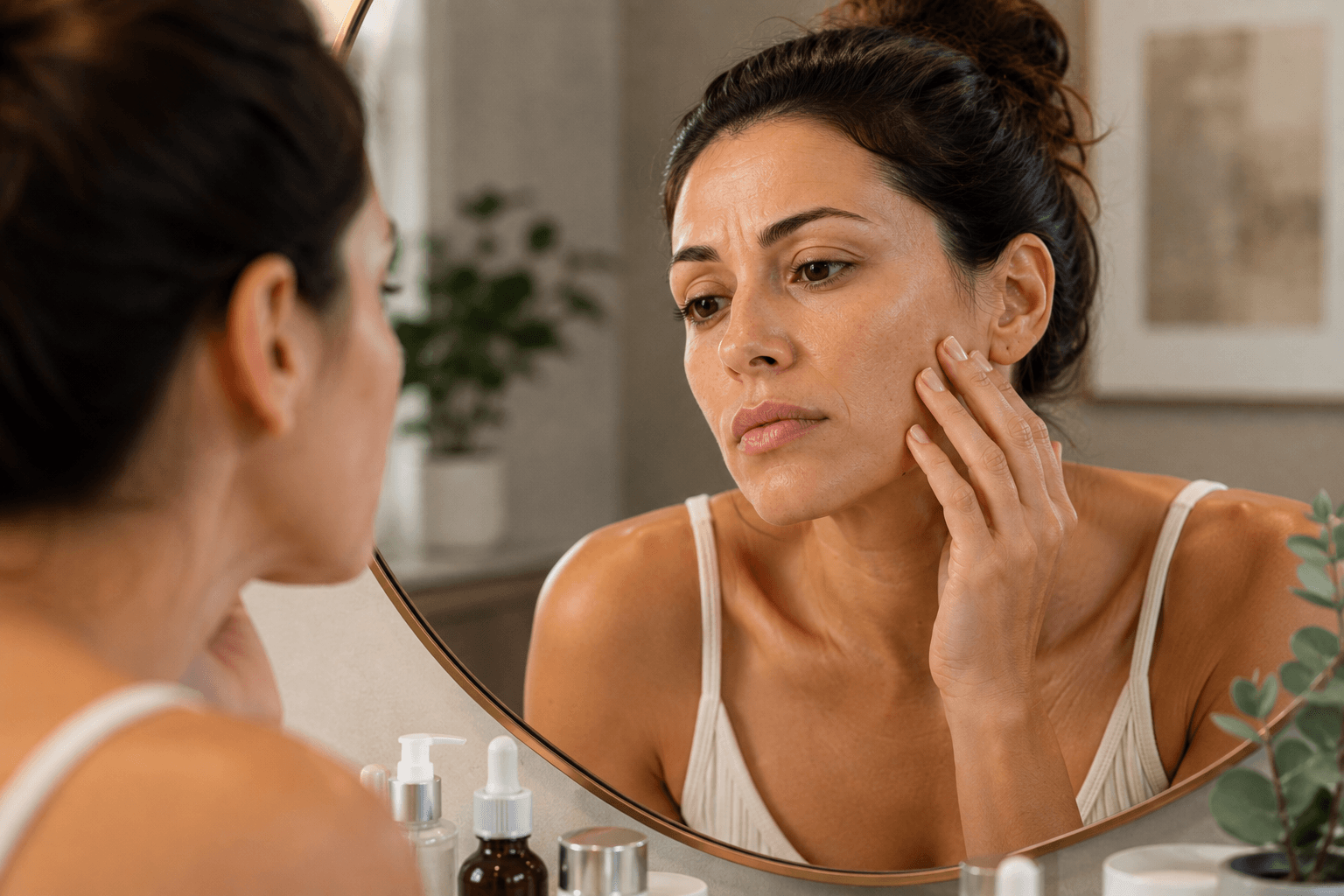
There is a particular moment a lot of people describe almost identically. You catch your reflection at a certain angle, maybe under overhead lighting or in a photo you did not expect to be in, and your jawline or cheeks look a little softer than you remember. Nothing dramatic happened. There was no single event. It just crept in gradually, and now you are wondering whether it is something you can actually influence or something you simply have to accept.
The reassuring part is that loss of firmness has a well understood cause, and while you cannot stop the clock entirely, there is a lot you can do to support your skin's structure. At Surface + Soul Aesthetics in Westlake Village, California, questions about skin tightening come up constantly, and most of them start with the same underlying question: why is this happening in the first place.
What Causes Skin to Lose Firmness Over Time?
Firm, resilient skin depends on a strong structural foundation underneath the surface, and that foundation changes more than people realize as the years go on.
Do Collagen and Elastin Levels Really Decline That Much?
Yes, and the decline is more significant than most people expect. Collagen production begins slowing in your mid-twenties, and by your forties, natural collagen levels can be roughly half of what they were in your twenties. Elastin, the protein responsible for skin's ability to snap back into place, follows a similar pattern. Together, this decline is the primary reason skin gradually loses its tautness and starts to sag.
Does Sun Exposure Accelerate the Process?
Considerably. Ultraviolet exposure breaks down existing collagen and elastin fibers faster than the natural aging process alone, which is why areas with the most cumulative sun exposure, like the cheeks, forehead, and neck, often show firmness loss earlier and more noticeably than more protected areas.
Can Weight Changes Affect Skin Firmness?
They can. Significant or repeated weight fluctuations can stretch the skin beyond what its elastin fibers can fully recover from, contributing to a looser, less structured appearance over time, independent of age alone.
Is Sagging Skin the Same as Fine Lines and Wrinkles?
Not exactly, though they are related. Fine lines are typically caused by repeated facial movement and surface-level changes, while sagging reflects a deeper structural change in the skin's supportive layers. Many people experience both simultaneously, but addressing one does not automatically resolve the other. Our sagging skin concern page goes into more detail on how this shows up.
Is Skin Tightening Something You Can Actually Influence?
This is the question most people really want answered, and the honest response is that while you cannot fully reverse the natural aging process, you absolutely can support your skin's structure in ways that make a visible difference.
What Actually Helps Support Firmer-Looking Skin?
The most effective approaches work by encouraging your skin to rebuild its own collagen and elastin rather than relying on a temporary surface effect. Treatments that stimulate this natural repair process tend to produce more gradual but longer-lasting improvement than anything that only affects the top layer of skin.
How Does Microchanneling Support Skin Firmness?
At Surface + Soul, Procell Microchanneling uses controlled micro-injuries to trigger the skin's natural collagen and elastin production, which is one of the more evidence-backed ways to support structural firmness over time. Because it works with your skin's own repair mechanisms, results build gradually across a series of sessions rather than appearing all at once, which tends to look more natural than an abrupt change.
Can a Hydrafacial Support Firmness Too?
Our Anti-Aging Hydrafacial pairs the same resurfacing and hydration benefits of a traditional Hydrafacial with ingredients specifically chosen to support firmness and target early signs of aging, making it a good complementary option alongside more intensive treatments.
Does Hydration Play a Role in How Firm Skin Looks?
It genuinely does. Well hydrated skin appears plumper and more taut, while dehydrated skin can look thinner and more prone to fine lines and looseness even when the underlying collagen structure has not changed dramatically. This is part of why hydration-focused treatments are often recommended alongside more structural ones.
Who Should Consider Treatment for Loss of Firmness?
Firmness concerns are not limited to any one age group. Many clients begin supportive treatment in their thirties, as collagen decline is already underway well before sagging becomes visually obvious, while others come in later once the change feels more pronounced. Starting earlier generally means working with a stronger baseline, but meaningful improvement is possible at most stages.
What Should You Expect From a Consultation?
A proper consultation looks at your skin's current structure, your history with sun exposure and lifestyle factors, and what timeline feels realistic for your goals. At Surface + Soul Aesthetics, every plan is built around your specific skin rather than a one-size-fits-all protocol. You can start with our virtual consult if you would rather talk through your concerns before an in-person visit, or review our full services page to see how different treatments work together.
How Long Does It Take to See Results?
Because treatments that support firmness work by stimulating your skin's own collagen production, results build gradually rather than instantly. Most clients begin noticing subtle changes in tone and texture within a few weeks, with more meaningful improvements in firmness developing over one to three months as collagen remodeling progresses through a full treatment series.
Can You Prevent Further Loss of Firmness?
Prevention plays a real role alongside treatment. Consistent daily sun protection is one of the most impactful habits for slowing further collagen breakdown, and maintaining a consistent skincare routine that supports skin health, rather than one that stresses the skin barrier, helps protect whatever structural integrity you currently have. If you are unsure whether your current routine is helping or working against you, our product and home-care consult is designed to answer exactly that.
Frequently Asked Questions
At what age does skin typically start to lose firmness? Collagen production begins declining in your mid-twenties, though visible firmness changes usually become noticeable later, often in the thirties or forties depending on sun exposure and genetics.
Can skincare products alone improve skin firmness? Topical products can support skin health and hydration, but they generally cannot replicate the collagen-stimulating effects of professional treatments like microchanneling.
Is treatment for loss of firmness painful? Most treatments, including microchanneling, involve mild sensation that is well tolerated, and numbing options are typically available for comfort.
How many sessions are usually needed to see a difference in firmness? Because these treatments work with your skin's natural repair cycle, a series of three to six sessions spaced several weeks apart is typically recommended for meaningful results.
Is sagging skin reversible? While the natural aging process cannot be stopped entirely, treatments that stimulate collagen and elastin production can meaningfully improve the appearance of firmness and structure over time.
Give Your Skin's Support System a Little Backup
Loss of firmness is one of the more predictable parts of how skin ages, but predictable does not mean permanent or untouchable. Understanding what is actually happening beneath the surface makes it possible to support your skin in ways that genuinely help rather than guessing with products that only work at surface level. At Surface + Soul Aesthetics in Westlake Village, California, that support starts with a real conversation about your skin's structure and goals.
Visit our homepage to learn more, or explore the Surface + Soul Aesthetics services page to see where to begin.