.avif)

What Is Actually Causing Your Dark Spots, and Will They Ever Fade on Their Own?
Updated August 2026
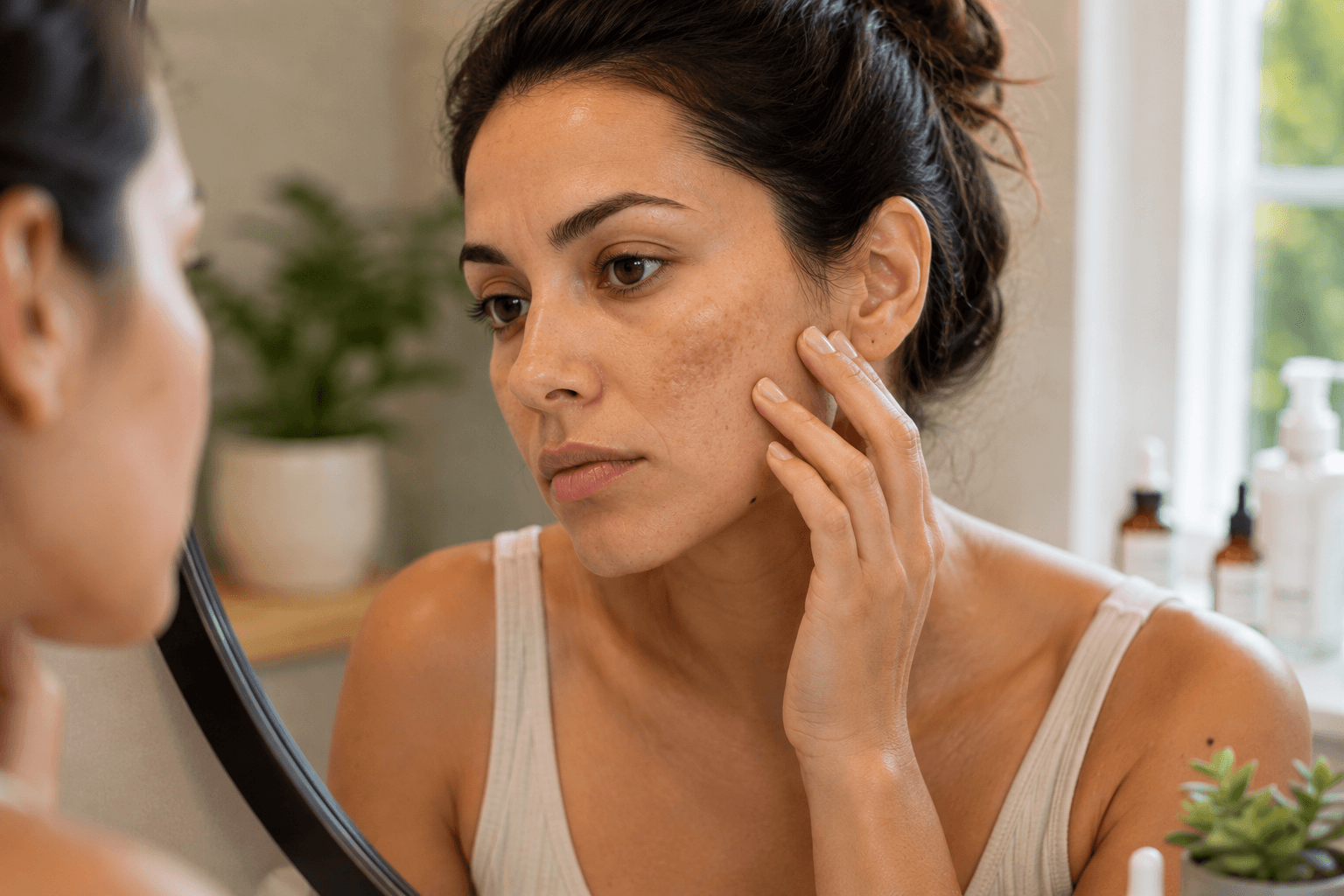
Dark spots have a way of showing up quietly and then sticking around far longer than you would expect. Maybe it started with a stubborn breakout that healed but left a shadow behind. Maybe it is sun spots that seem to deepen every summer. Either way, if you have been waiting for these marks to fade naturally and they simply have not, there is a reason for that, and it usually is not one that resolves with time alone.
At Surface + Soul Aesthetics in Westlake Village, California, hyperpigmentation and dark spots are among the concerns we are asked about most often, and for good reason. This is a condition that responds well to the right treatment, but it also tends to worsen without one.
What Causes Dark Spots and Hyperpigmentation?
Hyperpigmentation happens when your skin produces excess melanin in certain areas, creating patches or spots that are darker than your surrounding skin tone. Several triggers can set this process in motion.
Does Sun Exposure Cause Dark Spots?
Yes, and it is one of the most significant contributors. Ultraviolet exposure stimulates melanin production as a protective response, and repeated exposure over the years can lead to sun spots, particularly on the face, chest, and hands. This is also why dark spots often seem to intensify during summer months and fade slightly in winter, without ever fully disappearing.
Can Acne Leave Behind Dark Marks?
Very commonly. Post-inflammatory hyperpigmentation occurs when skin produces extra pigment in response to inflammation from a breakout, leaving a flat, discolored mark once the blemish itself has healed. Unlike active acne, these marks do not resolve quickly and can linger for months without treatment. If breakouts are part of your history, our acne concern page has more detail on how this connects to lingering discoloration.
Do Hormones Play a Role in Dark Spots?
They can, particularly in the form of melasma, a type of hyperpigmentation often triggered or worsened by hormonal changes, sun exposure, or certain medications. Melasma tends to appear as larger, more symmetrical patches rather than small isolated spots.
Why Do Dark Spots Seem to Get Worse With Age?
Cumulative sun exposure and years of minor inflammation add up over time, which is part of why hyperpigmentation becomes more noticeable and widespread later in life. Skin also becomes slower to repair itself with age, meaning existing dark spots take longer to fade even without new triggers.
Will Dark Spots Fade on Their Own?
This is one of the most common questions we hear, and the honest answer is that it depends on the type and depth of the pigmentation, but many dark spots do not fade meaningfully without intervention. Surface-level marks from a recent breakout may lighten somewhat over several months, while deeper sun damage or long-standing pigmentation often remains stable or worsens without treatment and consistent sun protection.
What Can an Aesthetic Clinic Do That At-Home Products Cannot?
Over-the-counter brightening products can offer modest improvement, but they generally work slowly and are limited in how deep they can address pigmentation. An aesthetic clinic brings access to professional-grade treatments and expertise that can accelerate and deepen those results considerably.
How Does Professional Treatment Target Hyperpigmentation?
Treatments designed to encourage healthy cell turnover and stimulate skin renewal can help fade existing discoloration while supporting more even pigment production going forward. At Surface + Soul, our Super Glow Hydrafacial incorporates exfoliation and brightening serums that help lift surface discoloration, while Procell Microchanneling works at a deeper level to support overall skin tone and texture by stimulating the skin's natural repair process.
Should You Combine Treatments for Dark Spots?
Often, yes. Because hyperpigmentation can involve both surface-level and deeper pigment changes, a combination approach, paired with the right home care routine and diligent sun protection, tends to produce more noticeable and lasting results than any single treatment alone.
How Important Is Sun Protection During Treatment?
Extremely important. Any treatment targeting hyperpigmentation can be undone or worsened by unprotected sun exposure, since UV light is one of the primary triggers for excess melanin production. Daily sunscreen is considered a non-negotiable part of any pigmentation treatment plan.
When Should You See an Aesthetic Clinic for Dark Spots?
If you have been using brightening products for several months without meaningful change, if dark spots seem to be increasing in number or intensity, or if you are simply unsure what type of pigmentation you are dealing with, it is a reasonable time to seek a professional opinion. An experienced provider can distinguish between different types of hyperpigmentation and recommend a plan suited to your specific skin rather than a generic approach.
What Should You Expect From a Consultation?
A thorough consultation should include a real conversation about your skin history, current routine, and sun exposure patterns, along with an honest assessment of what results are realistic and over what timeframe. At Surface + Soul Aesthetics, this is where every treatment plan begins, whether in person or through our virtual consult option. You can also review our full services page to see the treatments available for supporting more even tone.
How Long Does It Take to See Improvement?
Because pigmentation involves the skin's natural turnover cycle, meaningful improvement generally takes several weeks to a few months, depending on how deep and long-standing the discoloration is. Consistency, both in professional treatment and daily sun protection, tends to be the deciding factor in how quickly and completely dark spots respond.
Frequently Asked Questions
Can dark spots be completely removed? Many dark spots can be significantly faded with the right combination of treatment and consistent sun protection, though the timeline and degree of improvement depend on the depth and cause of the pigmentation.
Are dark spots from acne different from sun spots? Yes. Acne-related pigmentation is typically flatter and more localized to where breakouts occurred, while sun-related pigmentation tends to appear in areas with the most cumulative sun exposure, like the cheeks and forehead.
Do I need to stop using retinol before treatment for dark spots? Often, certain actives are paused briefly before specific treatments, but your provider will give you exact guidance based on the treatment you choose.
How soon can I expect to see my dark spots fade? Some initial improvement is often visible within a few weeks, though full results typically develop over one to three months as the skin's turnover cycle progresses.
What is the best first step if I am not sure what is causing my dark spots? Scheduling a consultation through our contact page is the best way to get a clear, personalized assessment before starting any treatment.
Let's Give Those Spots Their Exit Interview
Dark spots and uneven tone rarely improve simply by waiting them out, and the longer they sit untreated, the more established they tend to become. Understanding what is actually causing your hyperpigmentation is what makes it possible to treat it effectively rather than masking it temporarily. At Surface + Soul Aesthetics in Westlake Village, California, that starts with a real conversation about your skin.
Visit our homepage to learn more about our approach, or explore the Surface + Soul Aesthetics services page to see where to begin.